 Source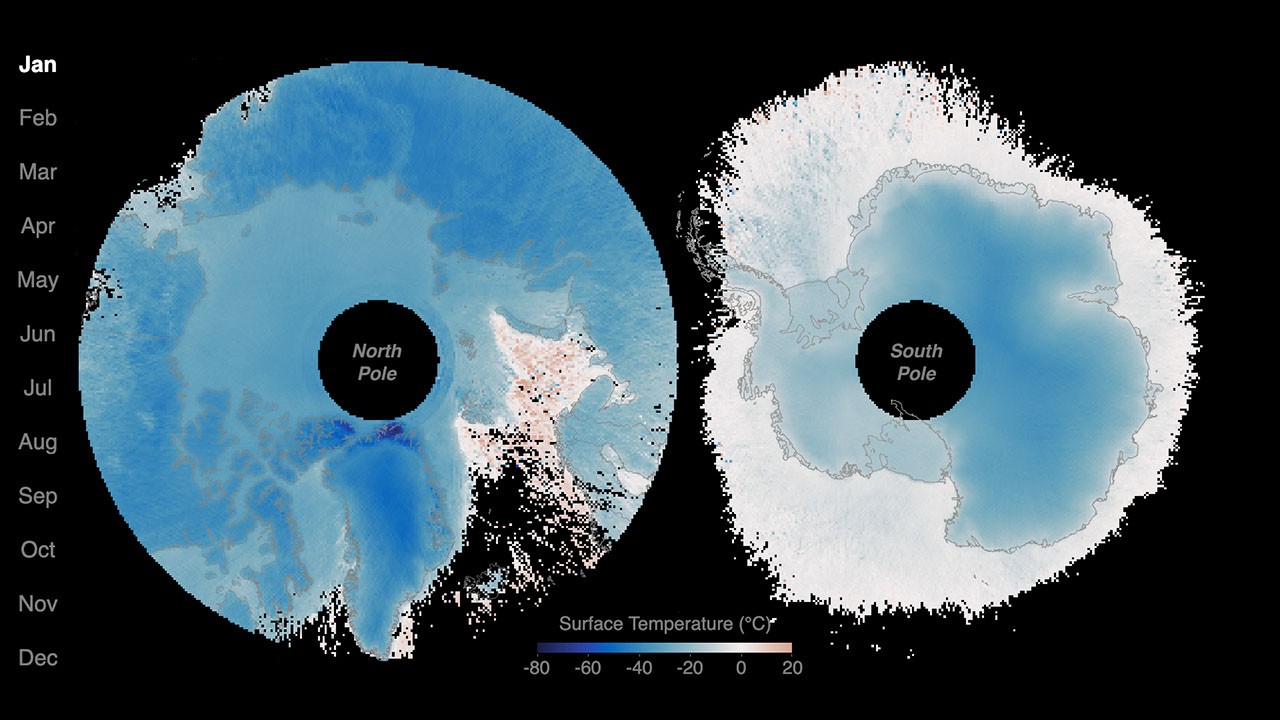
Sensing the Poles’ Hidden Heat
NASA's PREFIRE mission has produced animations showing two years of seasonal temperature fluctuations at the poles using far-infrared radiation, or invisible heat. The project tracks this energy to understand rapid changes in polar regions.
Why it matters
Improved measurements allow for more accurate weather and climate predictions used by Arctic communities, national defense, and various industries. This data also helps predict shifts in shipping routes and ice sheet stability.
The details
- PREFIRE's twin CubeSats began collecting science data in July 2024.
- Far-infrared radiation accounts for nearly 60 percent of energy Earth loses to space.
- The mission provides the first comprehensive global measurement of this invisible spectrum.
Show entities and relationshipsHide entities and relationships
In this article
Key connections
NASA developed and operates the PREFIRE satellite mission.
NASA Jet Propulsion Laboratory is related to NASA
NASA's Jet Propulsion Laboratory is a field center of NASA.
Chad Greene works at NASA Jet Propulsion Laboratory
Chad Greene is a glaciologist at NASA's Jet Propulsion Laboratory.
Tristan L’Ecuyer works at University of Wisconsin-Madison
Tristan L'Ecuyer is an atmospheric scientist at the University of Wisconsin-Madison.
Tristan L’Ecuyer leads PREFIRE
Tristan L'Ecuyer is the principal investigator of the PREFIRE mission.
The PREFIRE mission utilizes twin CubeSat satellites to gather data.
Show 1 more connectionsShow fewer connections
PREFIRE uses Far-InfraRed Radiometry
PREFIRE tracks far-infrared radiation emitted from Earth's polar regions.
Related events
PREFIRE Mission Captures Two Years of Seasonal Polar Temperature Data
Get the weekly recap
The stories like this one, picked and explained — once a week, straight to your inbox.