 Source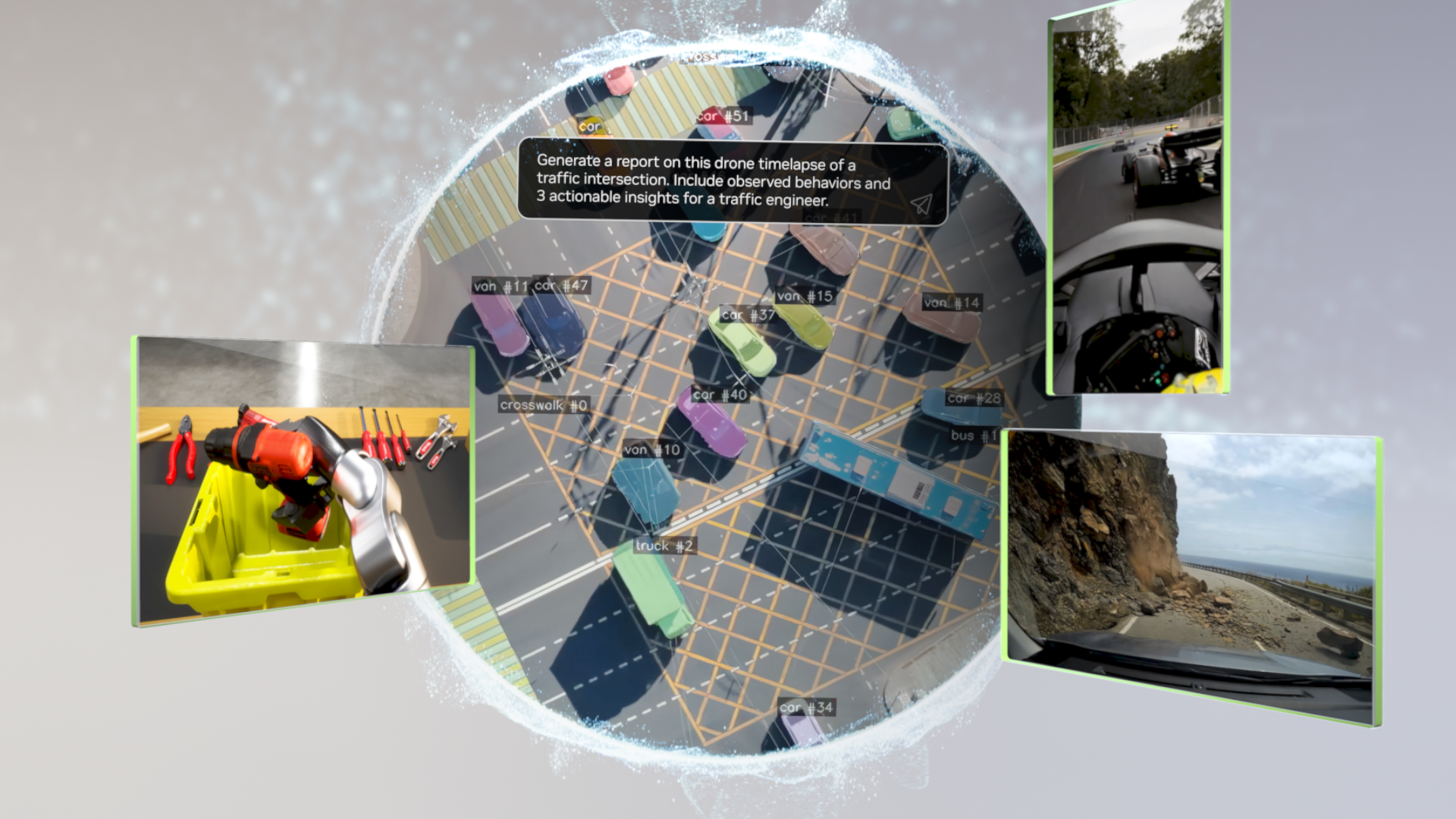
Into the Omniverse: How Open World Models Push the Frontier of Physical AI
NVIDIA introduced Cosmos 3, an open foundation model family for physical AI that integrates vision reasoning, world generation, and action prediction. These models provide a basis for developers to specialize systems for robotics, autonomous vehicles, and vision AI.
Why it matters
Providing open weights allows companies to customize AI for their specific hardware and environments using private data. This enables safer testing via simulation before deploying AI into real-world physical settings.
The details
- Cosmos 3 includes Super (64B), Nano (16B), and Edge (4B) model versions.
- The models are available under the Linux Foundation’s OpenMDW 1.1 license.
- Cosmos 3 ranks first on benchmarks including RoboLab and Artificial Analysis open weights.
Show entities and relationshipsHide entities and relationships
In this article
Companies
Products
Technologies
Organizations
Countries
Key connections
NVIDIA owns NVIDIA Cosmos 3
NVIDIA created and released the NVIDIA Cosmos 3 open foundation model family.
NVIDIA owns Cosmos 3 Super
Cosmos 3 Super is a 64B parameter model in the NVIDIA Cosmos 3 family.
NVIDIA owns Cosmos 3 Nano
Cosmos 3 Nano is a 16B parameter model in the NVIDIA Cosmos 3 family.
NVIDIA owns NVIDIA RTX
NVIDIA produces RTX GPUs.
NVIDIA owns NVIDIA DGX
NVIDIA produces DGX supercomputing systems.
Doosan Robotics uses NVIDIA Cosmos 3
Doosan Robotics is building on NVIDIA Cosmos for physical AI robotics applications.
Show 22 more connectionsShow fewer connections
LG Electronics uses NVIDIA Cosmos 3
LG Electronics is building on NVIDIA Cosmos for physical AI robotics applications.
Samsung Electronics uses NVIDIA Cosmos 3
Samsung Electronics is building on NVIDIA Cosmos for physical AI robotics applications.
Skild AI uses NVIDIA Cosmos 3
Skild AI is building on NVIDIA Cosmos for physical AI robotics applications.
Li Auto uses NVIDIA Cosmos 3
Li Auto is building on NVIDIA Cosmos for autonomous vehicle applications.
Xiaomi uses NVIDIA Cosmos 3
Xiaomi is building on NVIDIA Cosmos for autonomous vehicle applications.
Afari uses NVIDIA Cosmos 3
Afari is building on NVIDIA Cosmos for autonomous vehicle applications.
Centific uses NVIDIA Cosmos 3
Centific is building on NVIDIA Cosmos for vision AI agents.
Fogsphere uses NVIDIA Cosmos 3
Fogsphere is building on NVIDIA Cosmos for vision AI agents.
Linker Vision uses NVIDIA Cosmos 3
Linker Vision is building on NVIDIA Cosmos for vision AI agents.
Milestone Systems uses NVIDIA Cosmos 3
Milestone Systems is building on NVIDIA Cosmos for vision AI agents.
YUAN uses NVIDIA Cosmos 3
YUAN is building on NVIDIA Cosmos for vision AI agents.
Linux Foundation is related to NVIDIA Cosmos 3
NVIDIA Cosmos world foundation models are licensed under the Linux Foundation's OpenMDW 1.1 license.
NVIDIA leads NVIDIA Cosmos Coalition
NVIDIA launched and expanded the NVIDIA Cosmos Coalition.
NVIDIA Cosmos Coalition is related to Japan
NVIDIA expanded the Cosmos Coalition to robotics and manufacturing leaders in Japan.
Physical AI is related to NVIDIA Cosmos 3
NVIDIA Cosmos 3 serves as an open foundation model family for physical AI applications.
NVIDIA Cosmos 3 is related to World Models
NVIDIA Cosmos 3 provides open world foundation models.
NVIDIA Omniverse uses OpenUSD
NVIDIA Omniverse libraries leverage OpenUSD for 3D data exchange.
NVIDIA Cosmos 3 is related to Vision Language Models
NVIDIA Cosmos 3 can function as a vision language model.
NVIDIA Cosmos 3 is built with Mixture of Transformers
NVIDIA Cosmos 3 is built on a mixture-of-transformers architecture.
OpenUSD uses Digital Twins
OpenUSD provides an open framework for composing, reusing, and exchanging complex 3D data across digital twins.
Isaac GR00T is related to Robotics
Isaac GR00T is part of NVIDIA's physical AI stack for robotics.
OpenUSD uses Synthetic Data Generation
OpenUSD provides an open framework for synthetic data generation workflows.
Related events
NVIDIA Launches Cosmos 3 Open Physical AI Foundation Model
Get the weekly recap
The stories like this one, picked and explained — once a week, straight to your inbox.