 Source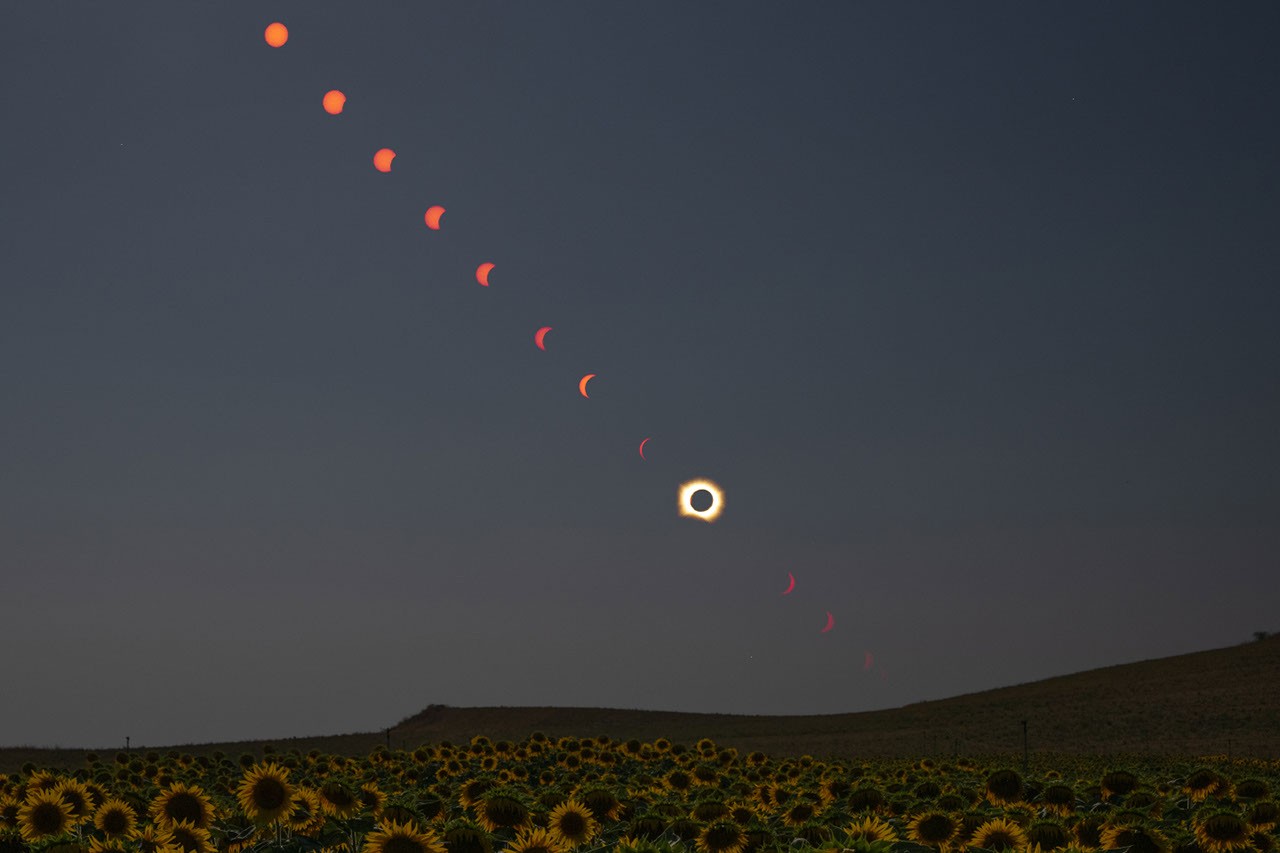
A Sunflower’s View of Totality
A total solar eclipse occurred on August 12, 2026, and was visible from northern Spain, Greenland, and Iceland. The event allowed for the observation of the Sun's corona and the conducting of atmospheric research.
Why it matters
These events enable scientists to measure how Earth's atmosphere reacts to sudden darkness. They also provide a rare opportunity to observe the Sun's outer atmosphere that is normally hidden by sunlight.
The details
- Totality in León, Spain, began at 8:28 p.m. and lasted two minutes.
- NASA used WB-57 jets and scientific balloons to collect atmospheric and solar data.
- The next total solar eclipse will occur on August 2, 2027.
Show entities and relationshipsHide entities and relationships
In this article
Key connections
WB-57 uses Infrared Imaging
NASA's WB-57 aircraft images the solar corona in infrared light
WB-57 uses Visible Light Imaging
NASA's WB-57 aircraft images the solar corona in visible light
Related events
Aug 12, 2026•19d ago
•Scientific ObservationNASA Observes August 12, 2026 Total Solar Eclipse
Get the weekly recap
The stories like this one, picked and explained — once a week, straight to your inbox.